First Date Ideas That Actually Work (And the Ones That Don't)
The best first date is 60–90 minutes, conversation-first, and easy to extend or end — a good cocktail bar, a coffee walk, or a food market beats dinner-and-a-movie every time. Here's the full list and the logic.
Chris Delgado · Jun 21, 2026 · 3 min read
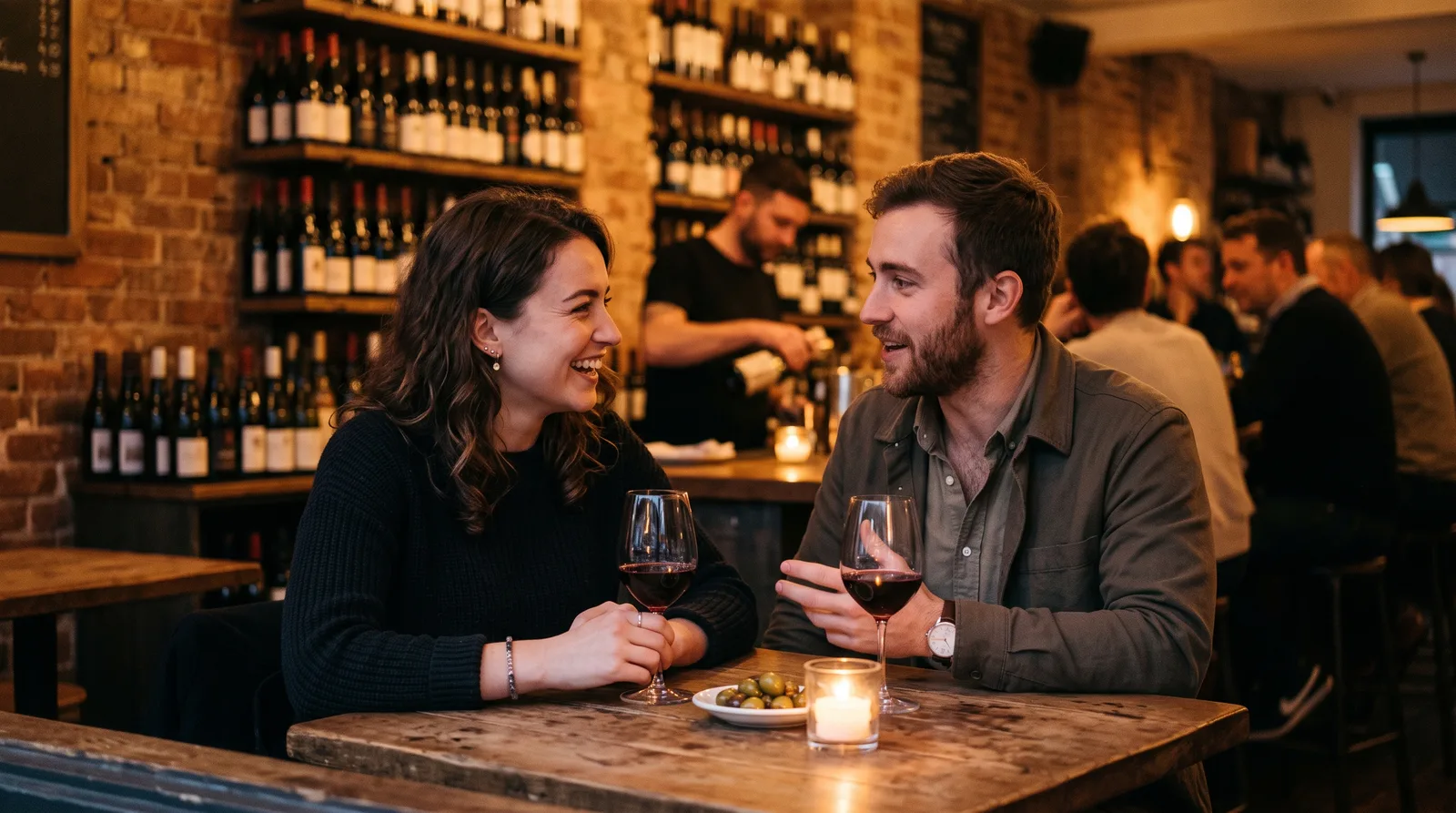
Most first dates fail at the planning stage, before anyone says a word. Pick a format where you can't talk, can't leave, or can't relax, and even great chemistry has nowhere to go. The fix is one principle: a first date is a conversation with a setting attached — so pick the setting that serves the conversation.
The short version:
- Plan 60–90 minutes, conversation-first, with a natural way to extend or end.
- A quiet cocktail bar, a coffee-and-walk, or a food market covers 90% of first dates.
- Skip dinner, movies, and anything requiring a car, a group, or athletic gear.
- You pick the place, you have a backup, and you know the second location.
What makes a good first date?
Three properties: you can hear each other, the commitment is small, and the format has built-in exits and extensions. That's the whole test. A 45-minute drink can become a three-hour walk if it's going well; a two-hour dinner reservation is two hours whether it's going well or not. Small-commitment formats don't just protect you from bad dates — they let good dates grow at their own speed.
There's also a signal layer: a well-chosen small date reads as socially competent. "Let's get a drink at this place I like, Thursday at 7" communicates decisiveness and calibration. A elaborate seven-part plan communicates that you're auditioning.
What are the best first date ideas?
- A good cocktail or wine bar, 7pm. The default for a reason: warm light, low music, natural 60–90 minute arc, trivially extendable. Pick somewhere you know — home-turf comfort is visible.
- Coffee and a walk. The daytime option: cheap, zero pressure, and walking side-by-side makes conversation easier for nervous daters than face-to-face seating. Route it past a park or market so the scenery feeds the conversation.
- A food market or food-hall graze. Built-in variety, shared decisions ("okay, we're splitting the dumplings"), constant conversation material, and you can leave whenever.
- One small activity plus a drink. Mini golf, an arcade bar, a record shop crawl. The activity handles silences and creates instant callbacks; the drink after is where the actual conversation happens. Best pick if either of you is the nervous type.
Two rules across all four: keep total cost of a first date modest — investment should follow connection, not precede it — and always pick a place you've actually been.
Which first date ideas should you avoid?
| Idea | Why it fails |
|---|---|
| Dinner at a nice restaurant | Two locked-in hours, face-to-face interview geometry, and stakes it hasn't earned |
| A movie, show, or concert | You sit silently next to a stranger for two hours — the anti-date |
| Hiking or a workout date | Sweat, logistics, and no exit; save it for date four when you know you like each other |
| Anything with your friends | She's meeting a panel, not a person |
| "Come over, I'll cook" | Skips every trust step; a considerate man doesn't propose it on date one |
The pattern: they all remove either conversation, comfort, or the ability to leave — and every good first date protects all three.
How do you actually run the date well?
Arrive five minutes early and get situated — greeting her settled beats meeting her flustered. Sit at a corner or the bar (90 degrees, not face-to-face) — it feels like talking, not interviewing. Put the phone away entirely; face-down on the table still counts as present. And end it deliberately: on a high, with a specific next step if you want one — "I'm taking you to that ramen place next. When are you free?" — rather than letting the evening dissolve into "so... this was fun."
The date is the exam. Do the homework.
A great venue buys you conditions, not chemistry. What happens in the 90 minutes still comes down to skills — opening warmly, listening for threads, creating the moments you'll text her about tomorrow.
That's trainable before you're on the clock. LoveStack — a dating coach app for men — has a Date Prep mode built for exactly this: goals for the night, conversation ammunition, the don't-do-this list, plus practice conversations so the first five minutes of the date aren't your warm-up. Walk in with the reps done, and the cocktail bar does the rest.
Frequently asked questions
- Who should pay on a first date?
- You invited, you pay — smoothly and without commentary. If she offers to split, a relaxed 'I've got this one, you can get the next' both settles it and floats a second date. If she insists, don't fight her over the card.
- How long should a first date last?
- 60 to 90 minutes as the plan, extendable if it's flying. Ending on a high beats stretching a good hour into a flat three. 'I've got an early one tomorrow, but this was great' is a strong exit line, not a rejection.
- How far in advance should I plan a first date?
- Two to four days out. Same-day reads as an afterthought; two weeks out builds pressure and gives the chat time to die before you ever meet.
- Should I have a second location in mind?
- Always. 'There's a great spot two blocks away' is how a good date extends itself naturally. Wandering while googling kills momentum you just spent an hour building.